
Published in Agency life, Creativity, Ideas
Exploring how typography is being re-imagined, AI vs. the human touch and motion-led experiences
By Emily Johnson, Midweight Designer.
As we move into halfway through the year, the creative industry continues to transform, driven by new trends, fresh thinking, and rapid technological advancement. I would like to take a moment to reflect on three design trends that are taking centre stage this year.
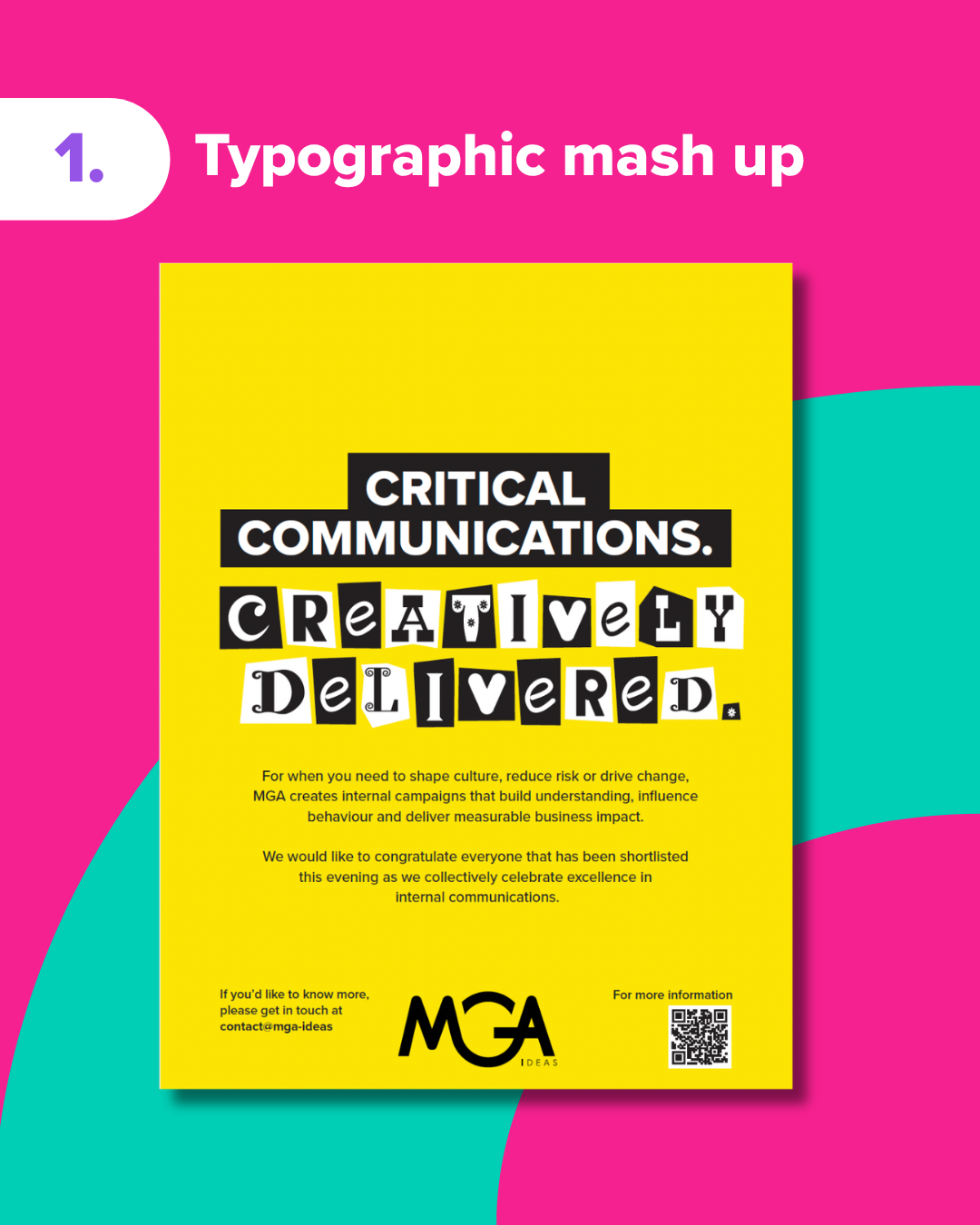
In articles, blogs, projects and our own advertisements at MGA, I have seen a rise of a bold new typographic trend: typographic pick and mix. The trend uses a mixture of letterforms from different typefaces to create an eclectic patchwork aesthetic. Often, I have seen work including this trend avoid photos or visuals entirely, with the maximalist typographic style, replacing the need for them. The designs tend to use minimal graphic elements as they rely on the type, shapes and sometimes texture.
For this trend I think the goal is promoting individuality, energy and embracing irregularity to provoke a reaction in audiences. At MGA we have recently created advertisement visuals utilising this trend, promoting our work in the creative communications space. Creating interest and curiosity within the design showcases our personality as a communications agency.
In addition to our own work, recent projects I love using this trend are Jasmina Begović’s ‘Font Feelings II seminar printed publication’ and the ‘It’s in our Nature’ campaign for the Horniman Museum in London. Both pieces of work, promote personality and expression, using organic forms which are forged by inconsistency and shape.
I think the typographic pick and mix trend ultimately reflects a greater shift towards design that feels expressive and has a strong sense of self. By celebrating playfulness and character, it creates a fun visual language that feels more human.
2026 has brought the rise and use of AI for the creation of artworks and campaigns. This change brings new creative opportunities and challenges to the design world. It pushes for work to stand out and for designers to create visuals that cut through the noise, inspiring people to think about how we can evolve with this changing space and our relationship with it.
AI has introduced a distinct visual aesthetic, prompting some businesses and designers to push back against the use of AI in favour of more authentic and tactile designs. This push back embraces inconsistences and hand-applied finishes – imperfections are seen as organic and authentic rather than a flaw.
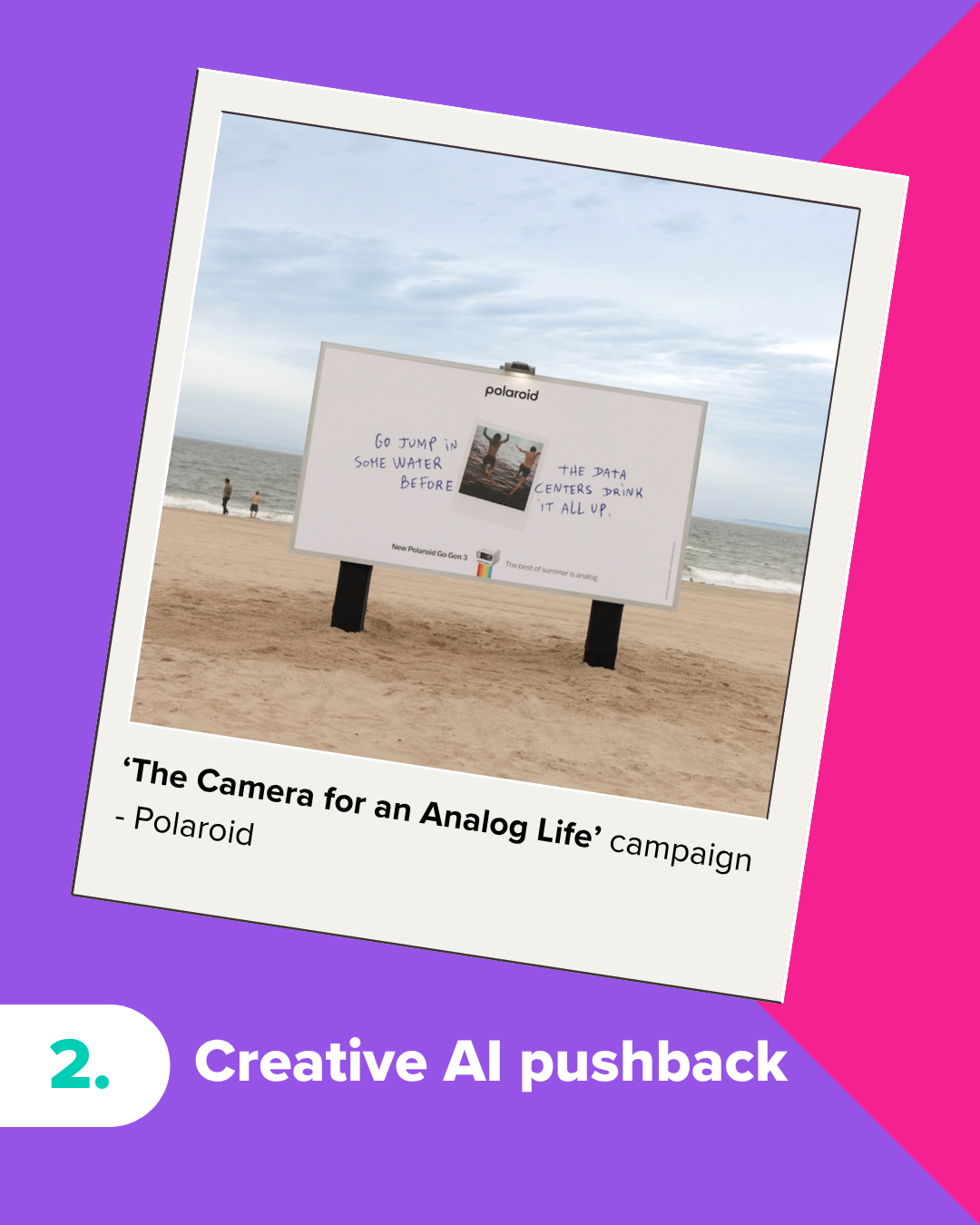
There is still a strong desire to have human-centred approach to design, with outcomes that feel handmade and analogue. A campaign that stood out to me recently was the Polaroid ‘The Camera for an Analog Life’ campaign. The messaging in the campaign is clear; to take a moment to pause, reflect and capture your life offline. The visuals are accompanied with powerful taglines like “No one on their deathbed ever said: I wish I’d spent more time on my phone.” and “Real stories. Not stories & reels.” Boldly celebrating the emotional power and connection physical artifacts and authentic human connection in this highly digital landscape.
As AI-generated aesthetics become more common, many designers are responding by embracing methods that feel more human and connected, demonstrating that authenticity and craft can be some of the most compelling design tools to stand apart.

Motion graphics, animated visuals and 3d content are becoming increasingly integrated into our digital landscape in 2026. In addition to the rise of short form content on platforms like LinkedIn and TikTok, these trends are shaping the way audiences are consuming visual content.
The use of punchy, bold and dynamic visuals can help brands, and it is becoming an exciting way to deliver messaging. Adopting these elements into their communications can evolve businesses as they can engage audiences and add to their digital storytelling. Interactive animations draw audiences in through sound, texture and movement, making for engaging, accessible pieces of content. With the competition for capturing attention increasing with the number of posts on social media, the effectiveness of communications has never been more essential.
A brand leaning into this trend is Poppi, a low-sugar soda brand that promotes their flavours and products using bright, fresh and colourful visuals. Pre Post, a 3d design, VFX and animation studio recently turned their fun brand and cans into sharable, and rememberable 3d content; creating a wonderful sensory experience for their consumers. The hyper-real product visualisers use organic forms and textures to showcase the flavours, creating an immersive sensory experience, leaving people wanting to see more.
Going into the year, I am seeing more brands follow suit with consumable motion design. Socials and advertisements are taking a noticeable shift into these worlds and creating visuals with movement. Animation and movement can help to tell the story, delight, inform or direct, and the power it holds is significant going forward.
Key takeaway:
My key takeaway from these 2026 trends is that there is a shifting balance and evolving relationship between innovation and authenticity. While immersive 3d, motion and bold type continue to push the boundaries, there is also still an appreciation for tactile design and craftsmanship. Together, these contrasting forces are shaping the creative landscape in 2026 so far. I’m excited to see how these trends continue to evolve throughout the second half of the year.
RECENT NEWS
 Award-winning work!
Award-winning work!
 Design for all: Keeping accessibility in mind.
Design for all: Keeping accessibility in mind.
 3 Trends Shaping the Creative World in 2026