

Published in Agency life, Creativity, Ideas
By Emily Johnson, Midweight Designer.
I have always been drawn to stories. To the way words and visual can come together in many ways and connect with audiences and create meaning. Growing up, I loved plays, books and world building found in film props and costume and design. These creative influences have showed me that every detail, can shape how a story is told and understood.
This fascination has followed me into my work and has shaped my approach to my role as a graphic designer. Working in the creative communications space, I see the relationship between visuals and words as vital. From the initial visuals through to the final roll out of a project have far more than just aesthetic value. It can form a structure that helps to deliver messaging with clarity, intention and ignite emotional connections. Design to me isn’t just what looks good, but it guides audiences through a story and resonates.
I see creative communications as more than just information delivery. My aim as a designer is to help make sense of transformation within organisations. Employees are constantly navigating change, adapting to new updates and shifting initiatives. In those environments effective communication and the use of storytelling become the thread that guides them through it. So, when visuals and messaging work together and have synergy, they create a sense of direction rather than confusion.
Reading Annie Atkin’s book, ‘Graphic Props for Filmmaking’, deepened my appreciation and love for detail and using storytelling as a practical tool, not just a creative one. Atkins’ work highlights that a visual decision, such as a colour use, typeface or texture, can completely evolve and dictate how a story feels. This idea sits hand-in-hand with the communications industry. The details in a campaign aren’t just decoration; they are cues that help employees understand the story the business is trying to tell. They anchor the message, reinforce tone and make the narrative feel coherent.
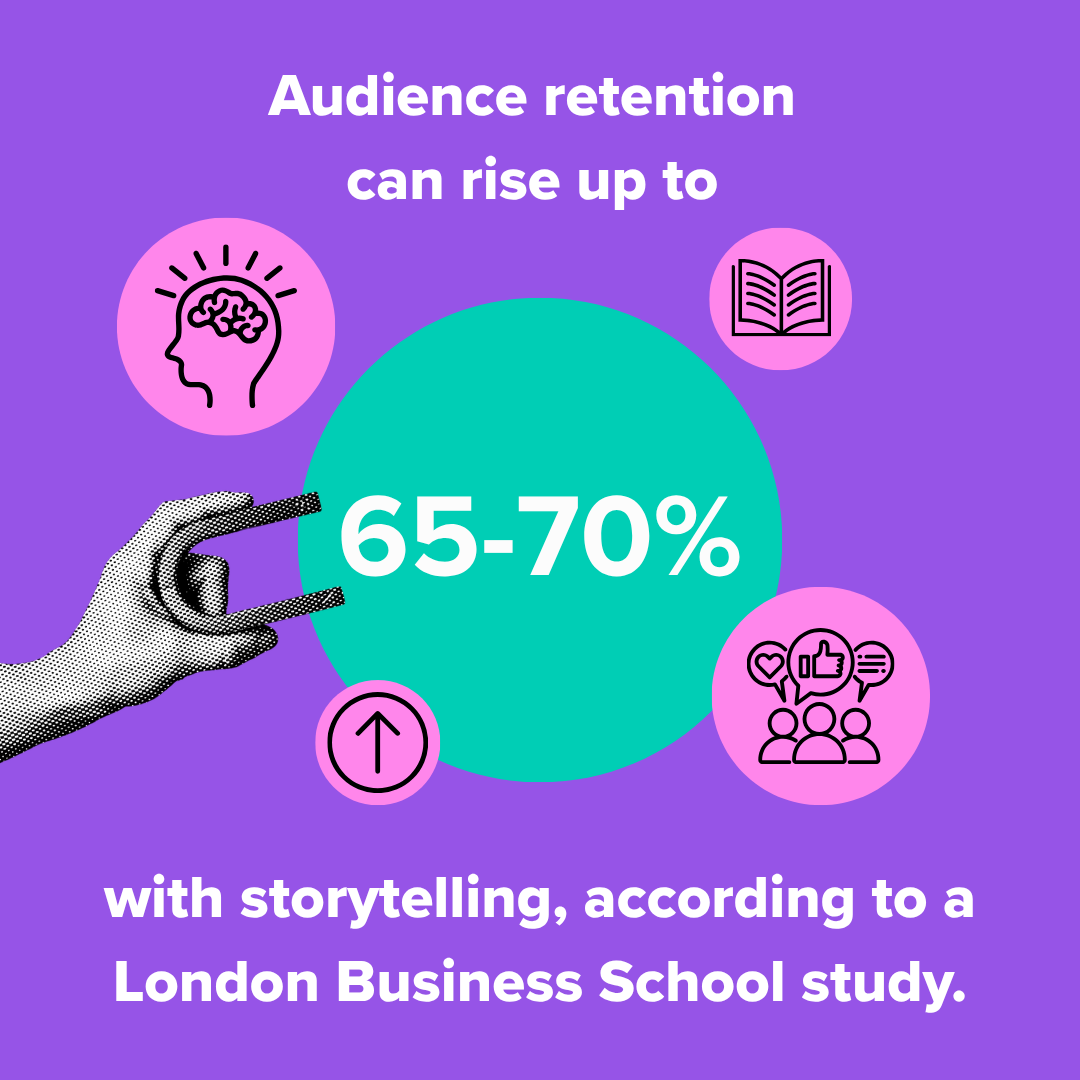
A London Business School study states that storytelling can increase audience retention up to 65-70%, which says a lot about the power of narrative. In a working world where employees are exposed to information-heavy, often dry communication, facts alone rarely stick. Storytelling changes that. When messaging is framed with context, emotion and a clear journey, it becomes something people can remember, connect with and care about. It humanises corporate communication and transforms it into something meaningful, and something employees can align with rather than skim past.
In conclusion, storytelling to me elevates communication into connection. It helps employees understand not just what is happening, but why it matters. And for me, it’s the perfect blend of creativity and purpose. Using narrative, detail and design to make creative communications clearer and ultimately more human.
RECENT NEWS
 Award-winning work!
Award-winning work!
 Design for all: Keeping accessibility in mind.
Design for all: Keeping accessibility in mind.
 3 Trends Shaping the Creative World in 2026